
Property decisions shaped through market awareness, design intelligence, and disciplined asset strategy.
Principal-led advisory for owners, investors, developers, and property stakeholders evaluating repositioning, residential development, multi-unit opportunities, interior asset improvement, and value-conscious property decisions throughout Greater Houston and select Texas markets.
Property strategy begins with the asset, the intended outcome, and the decisions required to connect the two.
Real estate and property decisions are strongest when design, use, market presentation, capital allocation, buyer or tenant expectations, and implementation timing are evaluated together.
Adorn helps property stakeholders examine how targeted physical improvements, interior direction, presentation strategy, and phased implementation may support repositioning, marketability, operational use, leasing, sale preparation, or longer-term asset performance.
For stakeholders making consequential decisions about property use, presentation, improvement, or future positioning.
Engagements may support an existing property, an acquisition under consideration, an underperforming asset, a development concept, a rental environment, or a property being prepared for sale, lease, expansion, or alternate use.
Owners and investors
Individuals and entities evaluating improvement priorities, tenant appeal, resale positioning, phased capital deployment, or property performance.
Developers and builders
Stakeholders requiring interior direction, model-home strategy, buyer-profile alignment, material standards, or presentation support.
Landlords and rental operators
Property owners seeking stronger leasing presentation, durable finish direction, furnished common areas, or tenant-focused improvements.
Professional and institutional owners
Organizations evaluating adaptive reuse, office repositioning, property expansion, administrative environments, or stakeholder-facing improvements.
Improvements are evaluated by what they must accomplish, not simply by how they will look.
Adorn considers the relationship between the property’s existing condition, target audience, intended use, capital constraints, design opportunity, implementation risks, and desired market effect.
Asset Position
Clarifying current condition, competitive strengths, deficiencies, functional limitations, and strategic opportunity.
Market Presentation
Aligning the physical environment with the buyer, tenant, investor, operator, or stakeholder the property is intended to attract.
Capital Discipline
Prioritizing improvements by visibility, function, durability, risk, timing, and likely contribution to the intended outcome.
Implementation Continuity
Creating phased direction that can guide materials, furnishings, procurement, contractors, presentation, and future improvements.
Repositioning Assessment
A repositioning assessment examines where the property stands now, what may be limiting its performance or presentation, and which improvements deserve priority.
Assessment may include:
Market-Presentation Strategy
The property should communicate the right story to the right audience before a buyer, tenant, investor, or stakeholder begins comparing details.
Strategic presentation may include:
Tenant & Buyer Appeal
Design decisions should respond to the people most likely to live in, lease, buy, operate, or recommend the property.
Appeal considerations may include:
Finish & Furnishing Direction
Materials and furnishings should support the property’s intended position, operating model, expected wear, replacement cycle, and long-term visual continuity.
Direction may include:
Model, Leasing & Presentation Spaces
Presentation environments should help prospective occupants or buyers understand the property, imagine use, and recognize value without becoming overdecorated or disconnected from the offering.
Presentation support may include:
Adaptive-Use Considerations
Some properties may have greater strategic value when evaluated for a revised use, additional unit, mixed function, hospitality component, office conversion, or phased alternate program.
Early considerations may include:
Procurement & Implementation Planning
Property improvement work can lose discipline when purchasing, lead times, approvals, trades, substitutions, and installation sequencing are not structured. Procurement planning helps preserve continuity between the approved strategy and the finished property.
Planning may include:
Property Project Stewardship
Project stewardship supports continuity from approved property strategy through design direction, purchasing, implementation priorities, presentation readiness, and closeout.
Stewardship may include:
Strategy may focus on one property, a defined improvement scope, or a broader real estate asset concept.
Final scope depends on property type, ownership goals, condition, target user, geography, project phase, capital readiness, and the level of design or implementation support required.
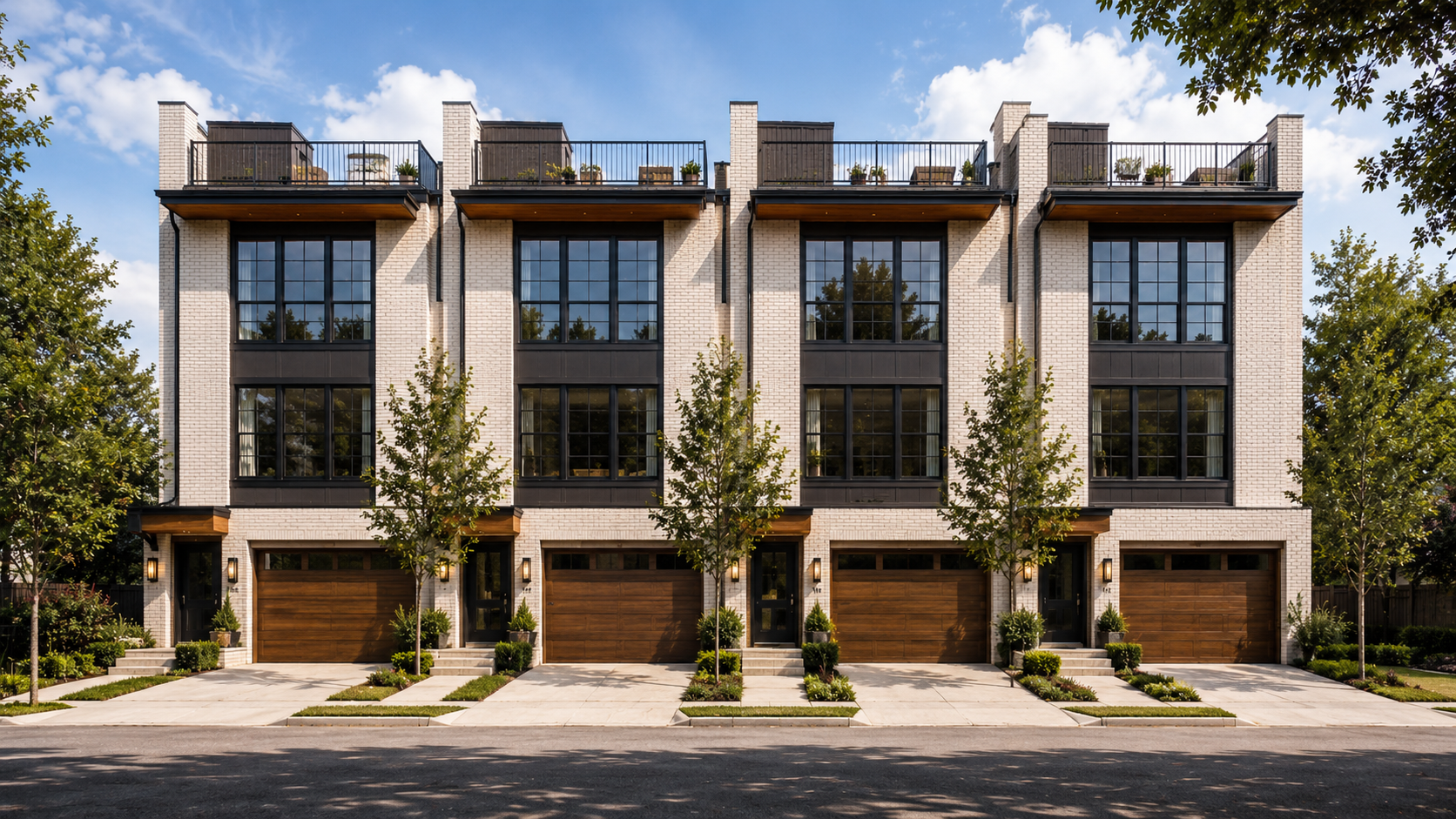
Townhomes & Multi-Unit
Infill townhomes, fourplexes, boutique rentals, small developments, and multi-unit presentation strategy.
ADUs & Guest Houses
Accessory units, rental suites, guest houses, casitas, backyard studios, and detached flex structures.
Executive Rentals
Homes positioned for relocation clients, professionals, long-term tenants, or higher-quality rental appeal.
Estate Repositioning
Private residences prepared for long-term use, sale, leasing, owner transition, or strategic improvement.
Model & Leasing Spaces
Model units, leasing environments, furnished examples, sales suites, and property-presentation interiors.
Commercial Interiors
Professional interiors, reception areas, offices, and stakeholder-facing business-property improvements.
Land & Development Concepts
Early-stage site-use narratives, target-user strategy, development concepts, and improvement-priority review.
Adaptive Reuse
Underused structures, accessory buildings, institutional spaces, and interiors with alternate-use potential.
Strong strategy begins with clear ownership goals, defined constraints, and realistic capital awareness.
The full scope does not need to be resolved before inquiry. The property stakeholder should, however, have enough clarity for Adorn to evaluate the asset, intended outcome, timeline, decision authority, and requested level of support.
Defined property
The parcel, residence, structure, unit type, or improvement opportunity has been identified.
Clear outcome
The owner can identify whether the goal involves leasing, sale, development, repositioning, improvement, or long-term use.
Capital awareness
Professional fees, improvements, furnishings, construction, consultants, permits, and implementation costs are understood as separate considerations.
Decision authority
The owner, investor, representative, or authorized decision-maker is prepared to participate in strategy and scope decisions.
Property strategy begins with fit, feasibility, and decision clarity.
Submission does not reserve availability or create a professional engagement. Each inquiry is reviewed for property type, geography, current phase, authority structure, timeline, capital alignment, and fit with the firm’s capabilities.
Submit the property inquiry
Provide the property location, ownership goal, intended use, timeline, current phase, and desired support.
Principal review
Adorn evaluates fit, readiness, property type, geography, scope, capital awareness, and required documentation.
Qualified next stage
Appropriate inquiries may move into consultation, assessment, site review, concept evaluation, or scope definition.
Written engagement
Services begin after responsibilities, fees, scope, decision authority, exclusions, and engagement terms are documented and accepted.
Real estate strategy requires clearly defined professional boundaries.
Adorn provides design-informed property strategy, interior direction, finish and furnishing guidance, presentation planning, procurement planning, and project stewardship as defined by written agreement.
Specialized responsibilities remain with qualified professionals.
Brokerage, appraisal, lending, tax, legal, zoning, permitting, architecture, engineering, surveying, construction, environmental, inspection, and financial services should be performed by appropriately licensed or qualified professionals.
ROI should be tested using actual project and market data.
Adorn may help frame improvement logic, user appeal, presentation quality, and capital priorities. Valuation, tax impact, rent projections, financing, resale assumptions, and investment returns should be reviewed with qualified real estate and financial professionals.
A property improvement concept shaped around flexible use, rental potential, buyer appeal, and disciplined capital allocation.
This sample concept demonstrates how an accessory dwelling unit can be evaluated as an asset strategy rather than a construction project alone.
A secondary structure can materially change how a residential property functions, presents, and performs.
The concept considers a Phoenix-area property with enough site flexibility to evaluate a detached ADU, guest casita, studio, or rental suite.
The strategy would examine site access, parking, privacy, utilities, outdoor use, finish durability, tenant or guest appeal, construction cost, and the owner’s long-term hold or resale objectives.
Define the right use before defining the design.
The concept should be tested across use, market, cost, presentation, and implementation.
What does the property become?
Clarify whether the addition creates a rental asset, guest suite, multigenerational solution, work environment, or future buyer feature.
How should the improvement be understood?
Develop a clear narrative around privacy, flexibility, outdoor living, independent access, and expanded property utility.
Who is the target user?
Study likely expectations involving parking, storage, kitchen function, work-from-home use, privacy, durability, and maintenance.
Which features change usability?
Consider separate access, lighting, privacy screens, landscaping, compact hospitality functions, storage, bathroom quality, and outdoor space.
Can the unit serve more than one purpose?
Use adaptable layouts and furnishings so the space can transition among guest, rental, studio, office, or family uses.
What must happen before capital is deployed?
Confirm local feasibility, utilities, permits, access, site limitations, cost assumptions, construction sequencing, and professional responsibilities.
Return should be evaluated through both financial performance and expanded property utility.
No single design decision establishes return. The owner should compare the complete cost and risk profile against achievable rent, use value, resale implications, and the likely duration of ownership.
Total Capital Requirement
Construction, site work, utilities, design, permits, consultants, furnishings, landscaping, financing, contingency, and operating costs.
Income Potential
Achievable rent, occupancy, vacancy, management fees, maintenance, utilities, insurance, taxes, and seasonal or long-term demand.
Property Utility
Guest accommodation, family flexibility, work space, caregiver housing, rental use, private retreat, or future owner needs.
Market Compatibility
Neighborhood expectations, buyer preferences, parking sensitivity, design quality, finish level, and local competition.
Resale Implications
Buyer comprehension, permitting status, quality of integration, independent access, maintenance burden, and value perception.
Decision Threshold
Proceed, reduce scope, phase construction, change use, postpone the project, or redirect capital toward another property improvement.
A warm modern desert palette can help the ADU feel independent while remaining connected to the primary residence.
The palette combines softly textured exterior finishes, warm wood, crisp dark metal, and mature desert landscaping to support durability, visual continuity, and a refined Phoenix-area property presentation.

Warm Limewash Finish
A softly textured neutral finish suited to desert light, contemporary residential architecture, and visual continuity with the primary residence.

Warm Teak Wood Accent
Adds warmth at doors, soffits, privacy screens, gates, cabinetry, or selected millwork without overwhelming the smaller structure.

Matte Black Metal
Creates crisp definition at windows, doors, railings, gates, lighting, plumbing fixtures, and architectural hardware.
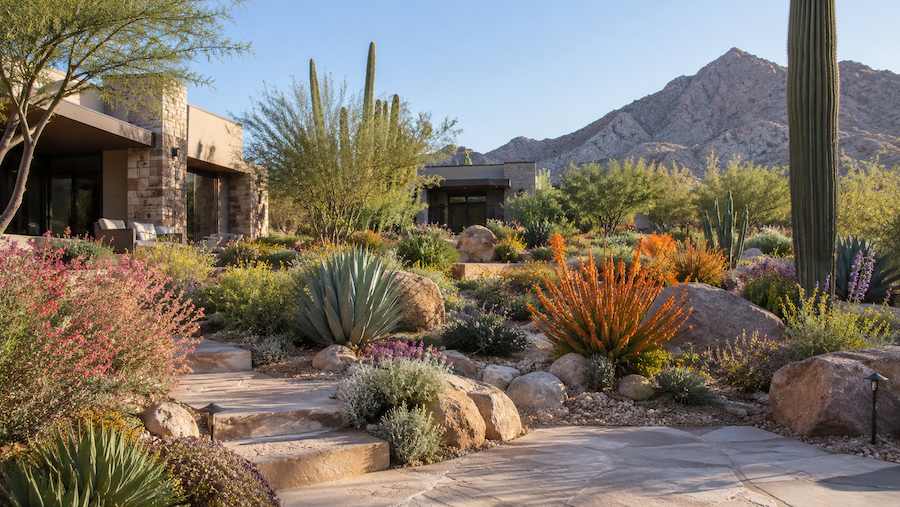
Desert Hardscape & Planting
Supports water-conscious landscaping, shaded outdoor use, guest arrival, privacy, and a low-maintenance connection between the ADU and main residence.
Strategy becomes more useful when the concept can be reviewed visually and operationally.
A property-strategy engagement may progress into preliminary visual and planning materials when appropriate to the agreed scope.
Potential preliminary materials may include:
Tell us about the property, the opportunity, and the decision you are trying to make.
Submit a Real Estate & Property Strategy Inquiry so Adorn can review the property type, current phase, intended outcome, decision structure, geography, timeline, and alignment with the firm’s capabilities and availability.